
What I Learned Combing Through 85 Years of Two Ten History
Monday, May 11, 2026
Several months ago, I explored Two Ten’s archives in Waltham, Mass. I spent an afternoon sifting through hundreds of carefully preserved newspaper clippings, decades-old documents, company scrapbooks, and board meeting minutes documenting the early days of the historic Foundation.
I had already known the basic story: founded in 1939 amid the Great Depression, a small group of footwear professionals gathered at 210 Lincoln Street in Boston and collected money to give to their colleagues in need. In the decades that followed, Two Ten expanded to include counseling, scholarships, upskilling grants, professional networking, and more. Eventually, after years of covering the footwear industry as a journalist, I joined the organization myself to help tell that story from the inside.
It’s one thing to know your history in broad strokes. It’s another to see it unfold through original records. What emerged in the archives wasn’t just program files and financial documents. It revealed a pattern of response. Time and again, year after year, Two Ten adapted to meet the moment, all while staying true to its underlying mission to help shoe people.
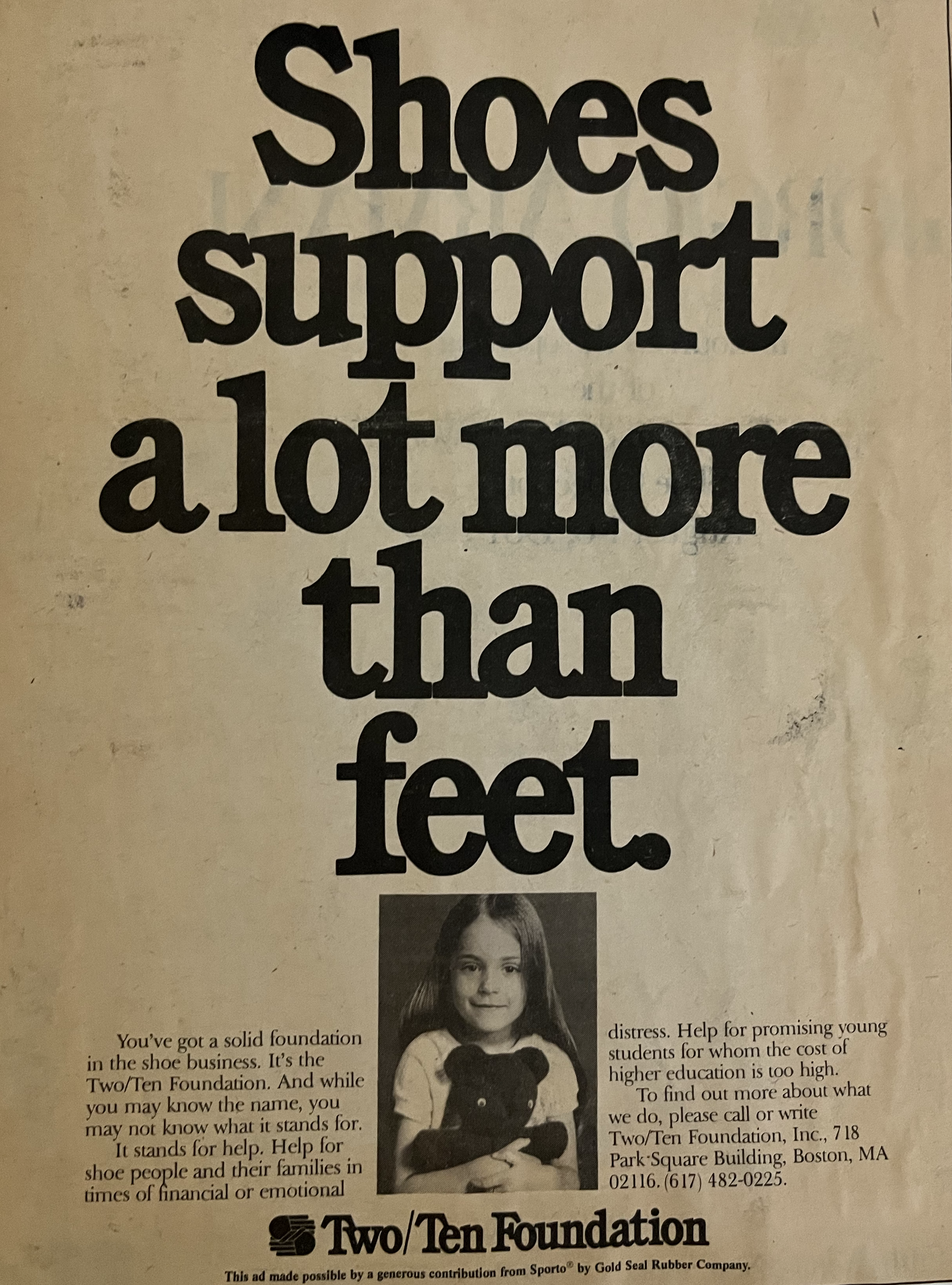
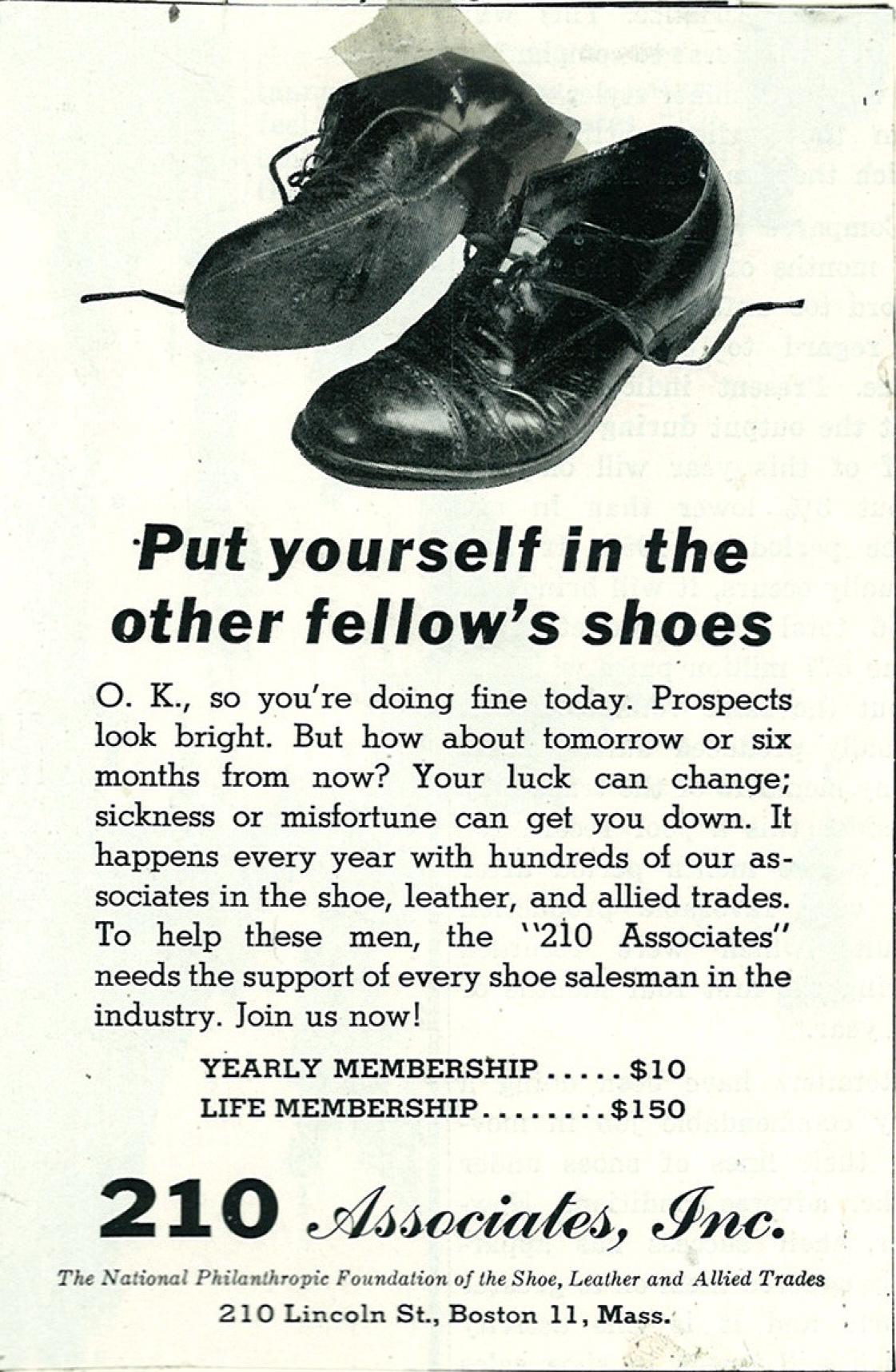
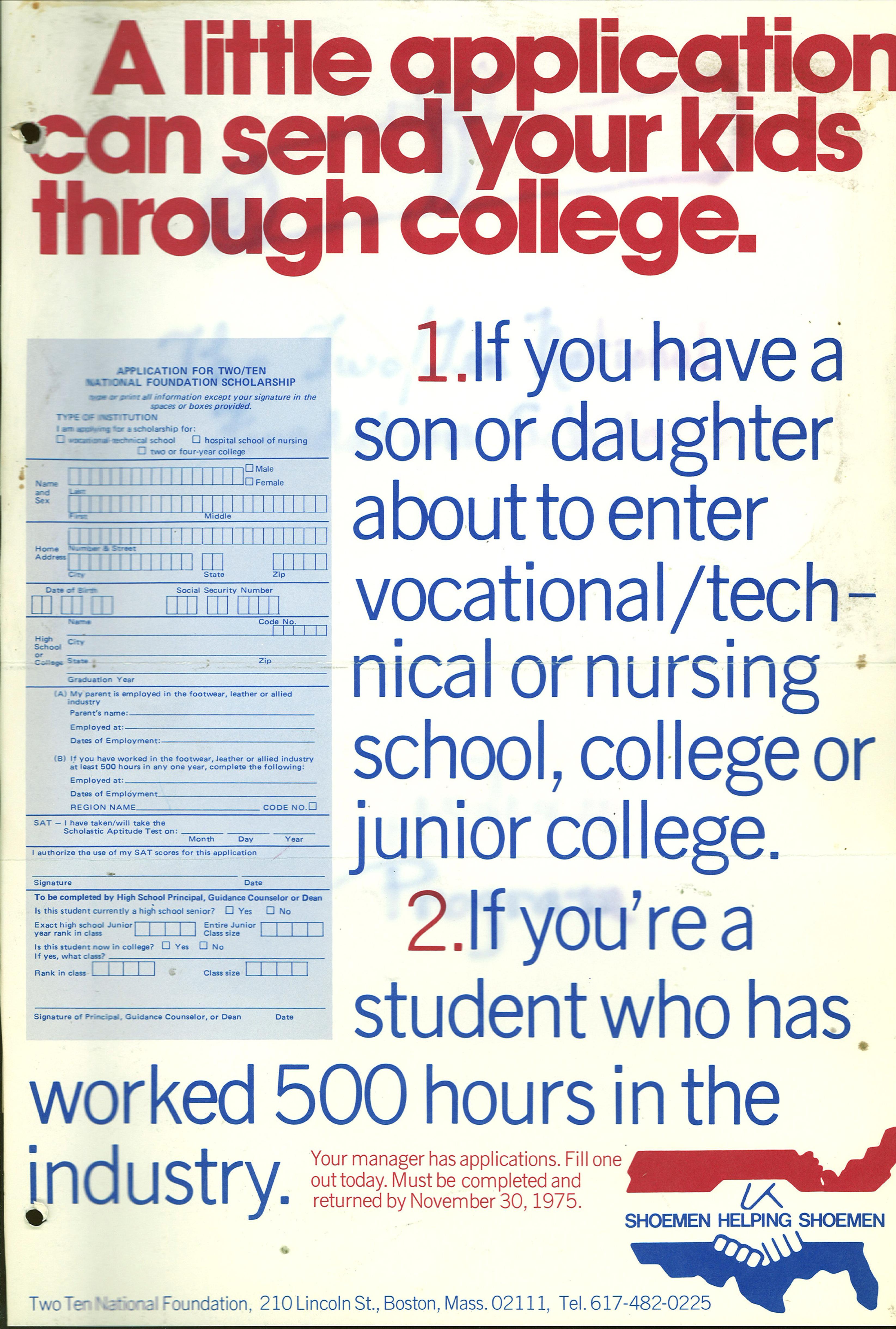
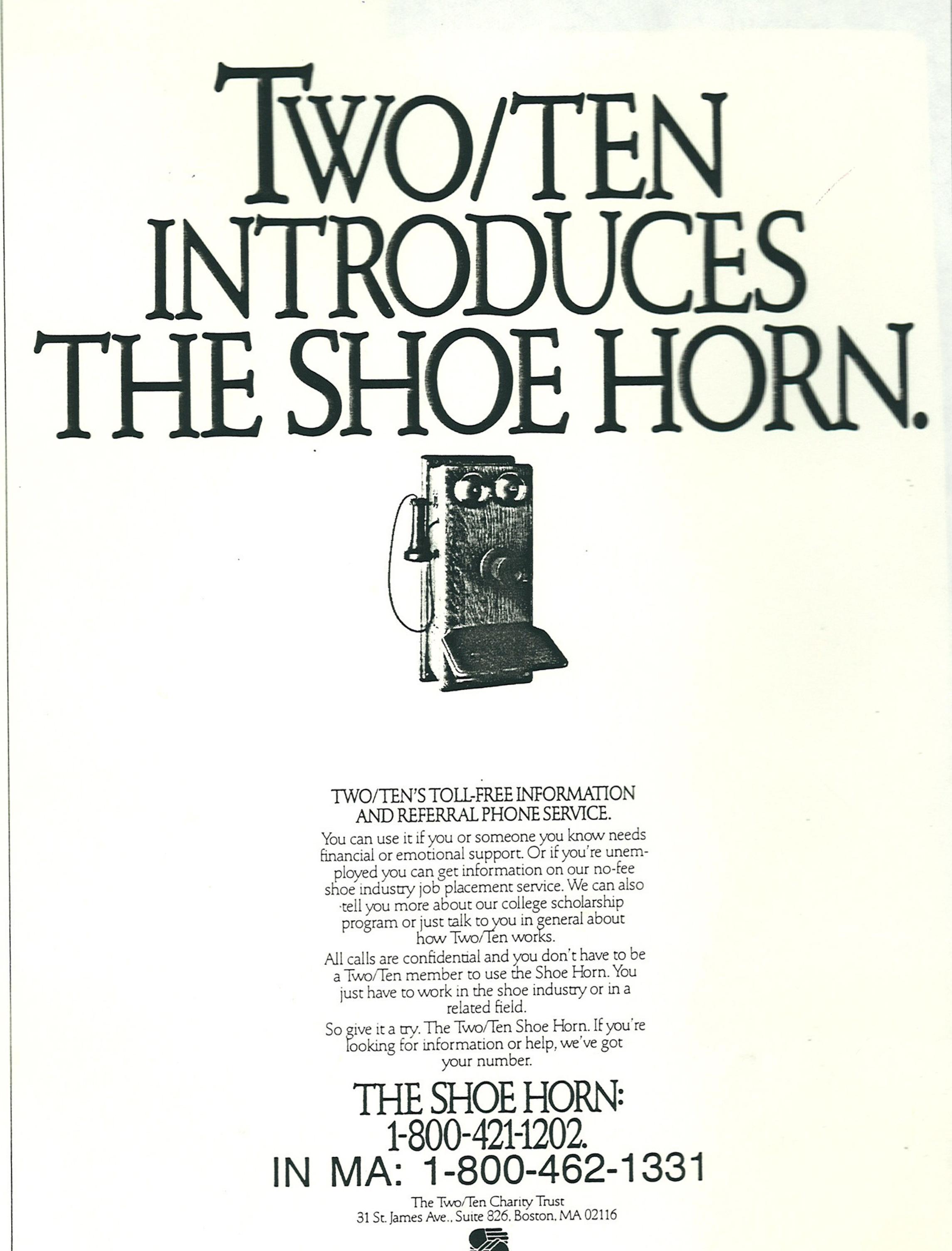
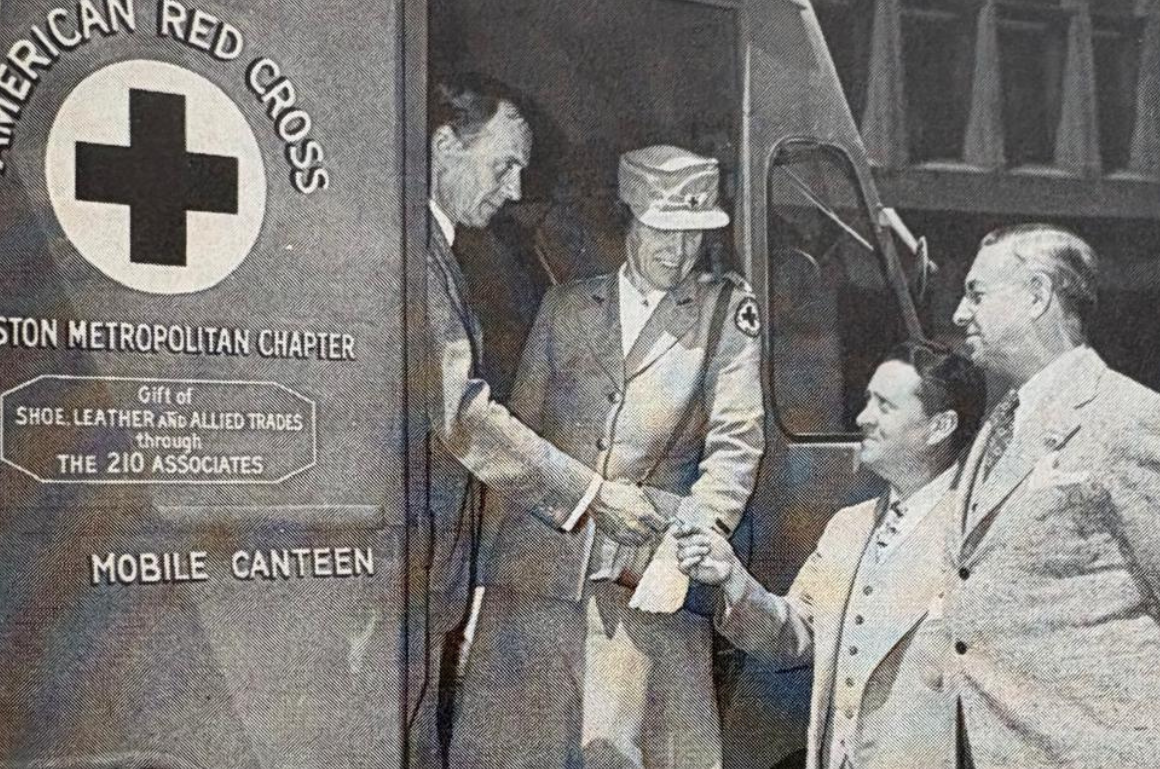
That pattern was visible from the very beginning. Born in the uncertainty of the Great Depression, Two Ten quickly found itself responding to another global disruption: World War II. In 1943, it donated a mobile canteen to the American Red Cross to support troops during wartime and conduct door-to-door outreach in the Boston shoe community. According to records I found, this truck helped distribute more than three million doughnuts, nearly one million cups of coffee, and hundreds of thousands of bottles of milk around Boston.
The specifics changed with each era, but the impulse stayed the same: identify need in the community, then meet it in whatever way the moment required. When the cost of higher education began to rise in the late 1960s, Two Ten launched a scholarship program for footwear workers and their families. Newspaper clippings from the 1970s show some of the first recipients, many of whom went on to build long careers in and outside of the industry.
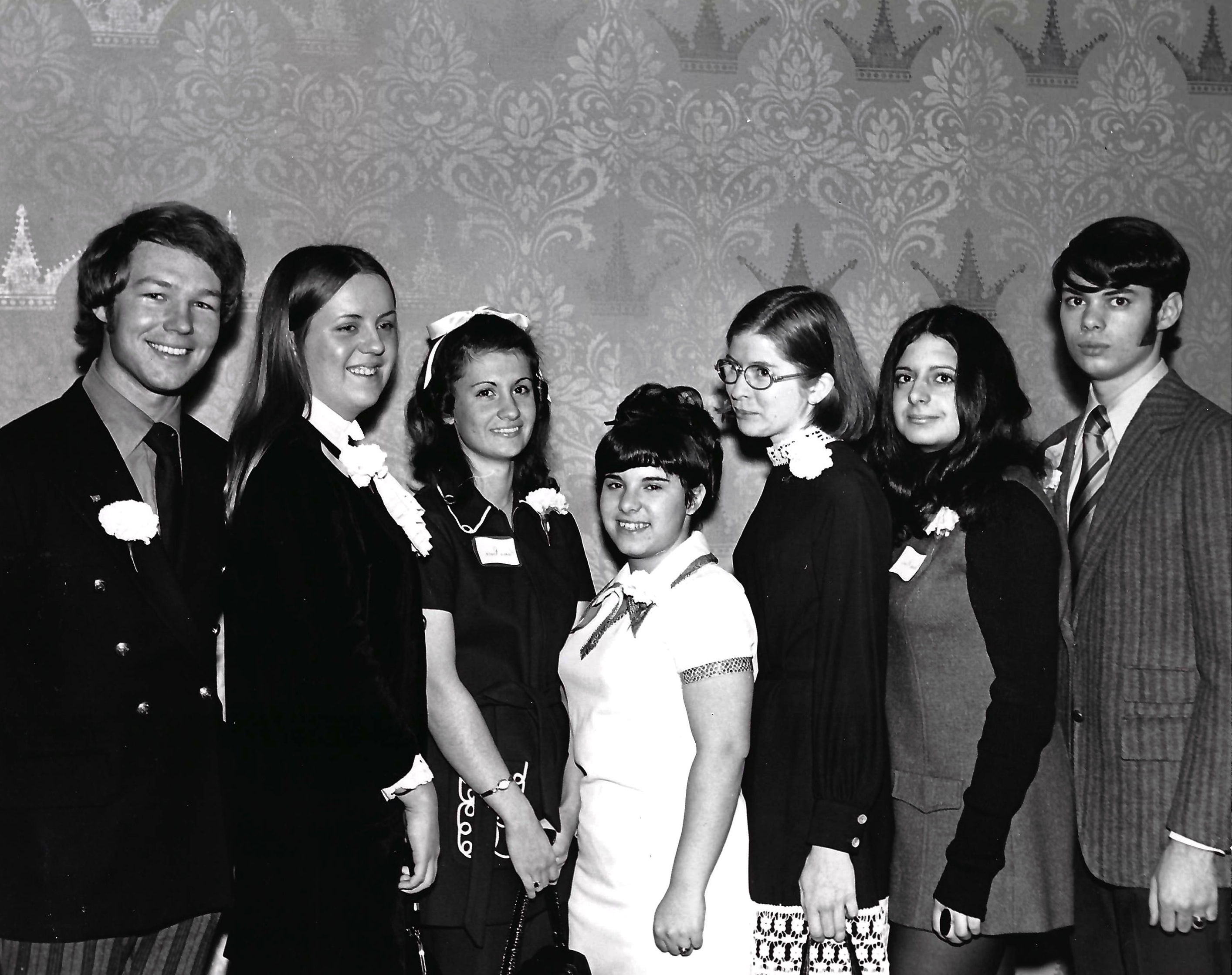
Digging deeper into those names, I even traced a few individuals through public records and reached out directly. Some responded. Many still maintained a sense of gratitude for having been seen and supported at a pivotal moment in their lives.
In the 1980s, as the country grappled with the AIDS epidemic, Two Ten again shifted into a different mode of response, this time focused on education and information. The Foundation distributed thousands of informational pamphlets across the industry at a moment when awareness was critical.
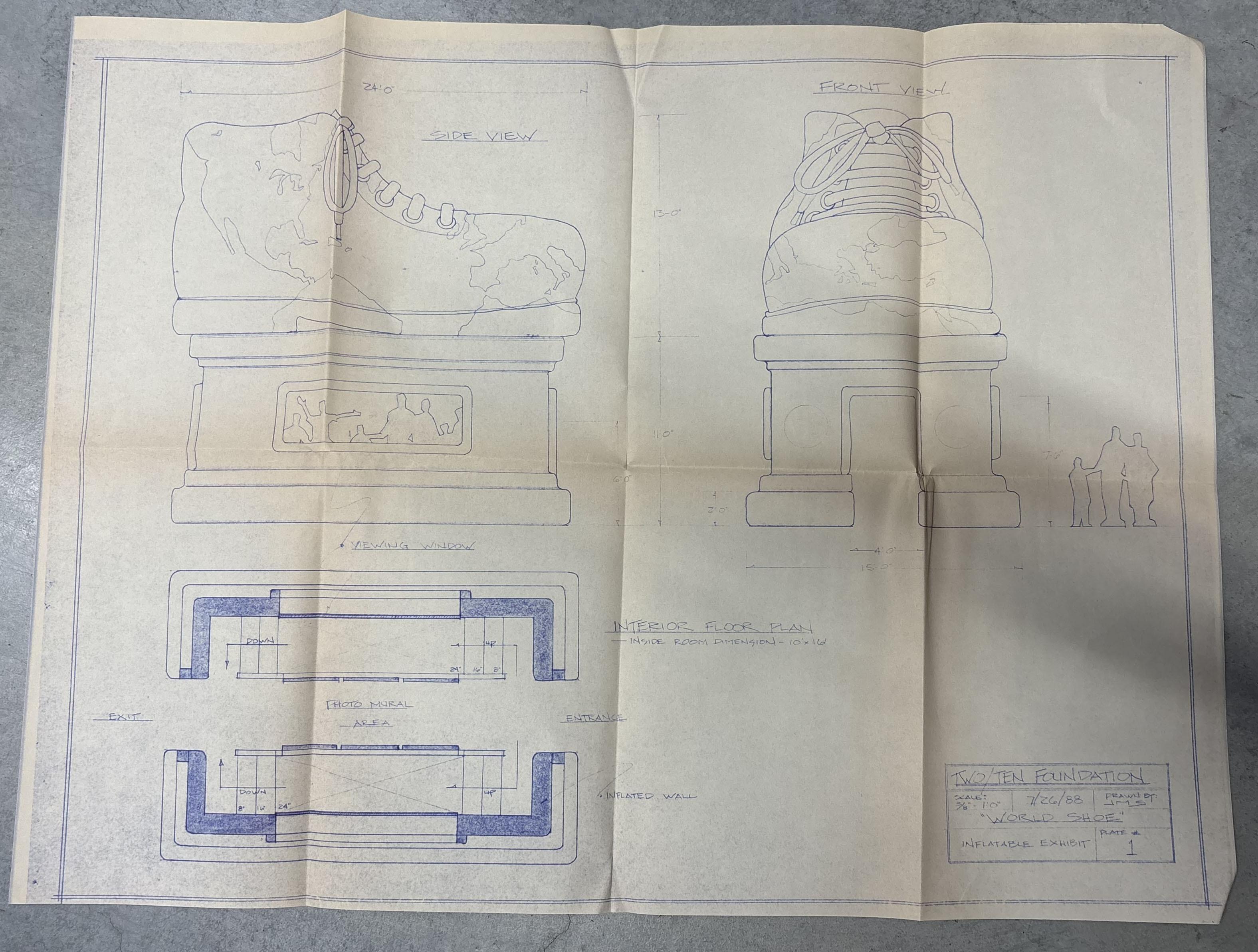
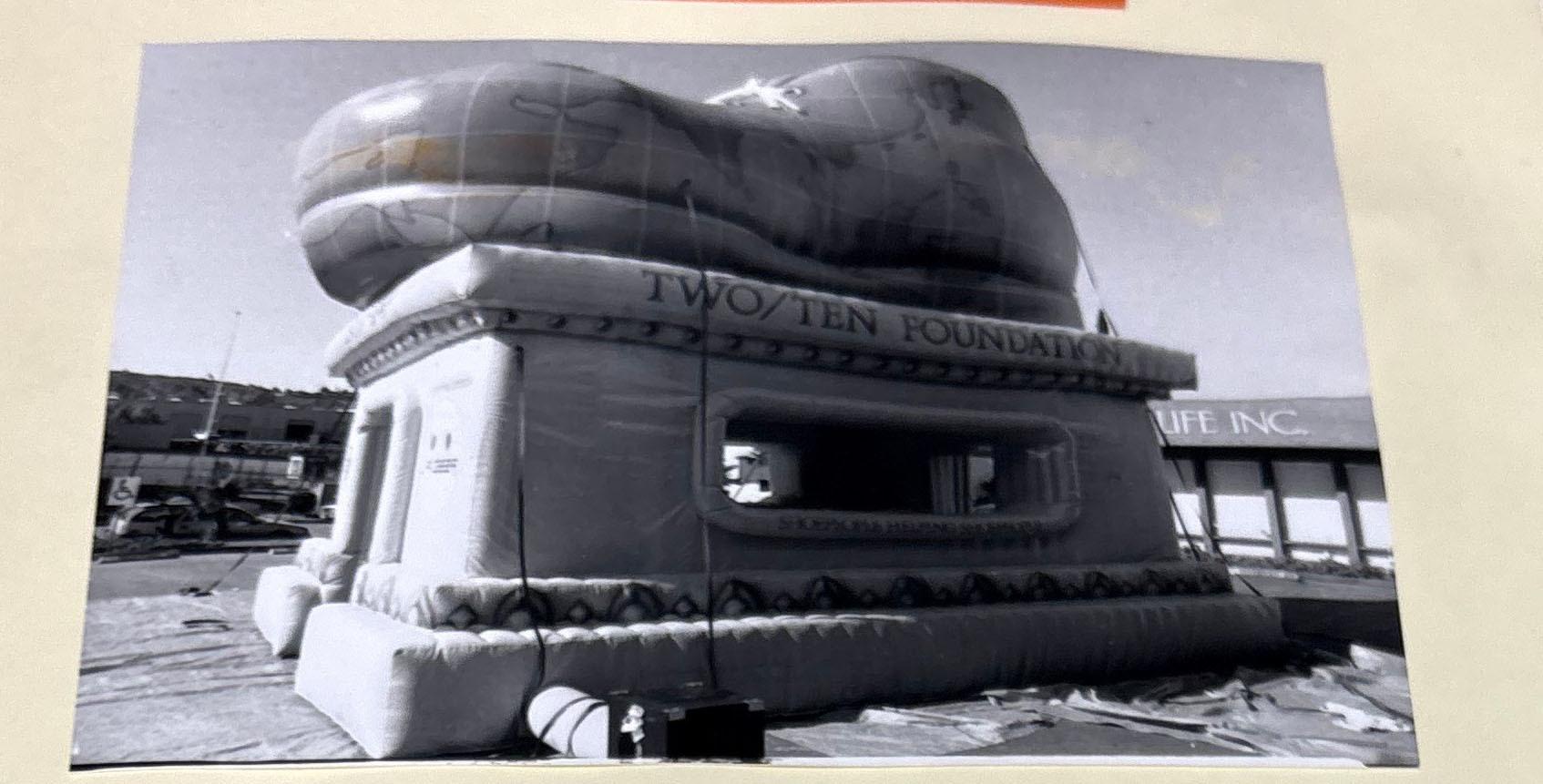
In another folder, I found something that at first felt almost whimsical: blueprints for a 25-foot inflatable shoe that anchored a 1989 campaign to distribute thousands of pairs of shoes to people in need across 12 cities. But even that gesture, as unusual as it was, reflected the same instinct I kept seeing everywhere else: respond to a need while meeting people where they are.
And then there were smaller moments. Charter flights organized to help industry professionals get to conferences. Ladies’ Nights, golf outings, and walkathons that strengthened community ties. Annual galas that brought together industry leaders and performers like Ella Fitzgerald, Sammy Davis Jr., Paul Anka, and Marvin Hamlisch. A Two Ten theme song. A program to help people of retirement age. A dedicated phone line to make support more accessible.
The responses varied, but the purpose was always there: supporting the people in the footwear industry.
Walking out of the archives, I felt a deeper appreciation for our enduring mission that still shows up today. It has carried Two Ten forward and will continue to define its work for decades to come.
By Shoshy Ciment Rosen, Editorial Lead at Two Ten.